
12 Ways to Attract Customers to Your Restaurant
Plan where to start filling empty tables, which offer to test first and how to give a first-time guest a reason to come back.

Bringing more customers into a restaurant starts with understanding where people find you, why they pick you and what makes them come back. Showing up on Google can start the first visit. A clear menu, consistent food and service on time are what turn that visit into a repeat order. Rather than spending on every channel at once, start with the weakest link in your restaurant.
Where should you start winning customers?
A lokanta (a traditional Turkish eatery) that is full at lunch but empty in the evening needs something different from a neighborhood restaurant that has just opened. The first needs an offer built for a specific time slot. For the second, the priority is getting people who live nearby to know the place exists. Look at your sales for the last two weeks by day and by hour. Put side by side how many guest checks were opened in each service, the average spend and the complaints that keep coming up.
Keep the number of checks separate from the number of guests. A table of four can be a single check, and delivery orders tell you nothing about how full the dining room is. If you do not record guest counts regularly, start with check and order counts, and do not report them as head counts.
- If people cannot find you, focus on your business profile, your signage and how visible you are in the neighborhood.
- If people look at the menu but do not book or order, check your prices, your dish descriptions and how easy it is to get in touch.
- If first visits happen but few come back, work on service, consistency of flavor and feedback.
- If the tables are full but the money is thin, look at food cost and discounts before launching a new campaign.
12 ways to attract customers to your restaurant
1. Keep your Google Business Profile complete
Someone looking for a place to eat nearby may check your hours and photos on Google Maps before they ever walk in. Verify your business, then check the category, address, phone number, map pin and holiday hours. Try opening the menu link on a phone. Photos that show the entrance and the seating area make it easier for a first-timer to recognize you.
Google ranks local results on factors such as relevance, distance and prominence. Complete information and fresh photos are the foundation of this work, but they do not guarantee any particular position. For details, see Google's guide to local ranking.
2. Say clearly which guest you are for
Instead of "flavors for everyone", explain why people choose your restaurant. That might be a menu that fits a short lunch break for nearby office workers, a comfortable seating area for families, or an evening service people can plan with a booking. Whatever you promise has to be an experience your kitchen and floor team can actually deliver.
Use that promise with the same meaning in your profile description, on your website and on the menu at the door. Seeing different prices or opening hours in different places makes it harder for a customer to decide.
3. Make the menu and prices easy to reach
A guest should not have to send a message to ask a price, or zoom into a photo of a menu in tiny print. Offer dish names, ingredients and current prices that read comfortably on a phone, with photos that show the real portion. Keep the menu link visible on your social media profile and your business profile.
A very long list of dishes can make choosing harder. When you push your signature dishes, look at sales and cost data together. Menu engineering helps you make those calls. If you want to manage price changes from one place, you can follow the steps in the guide to creating a QR menu.
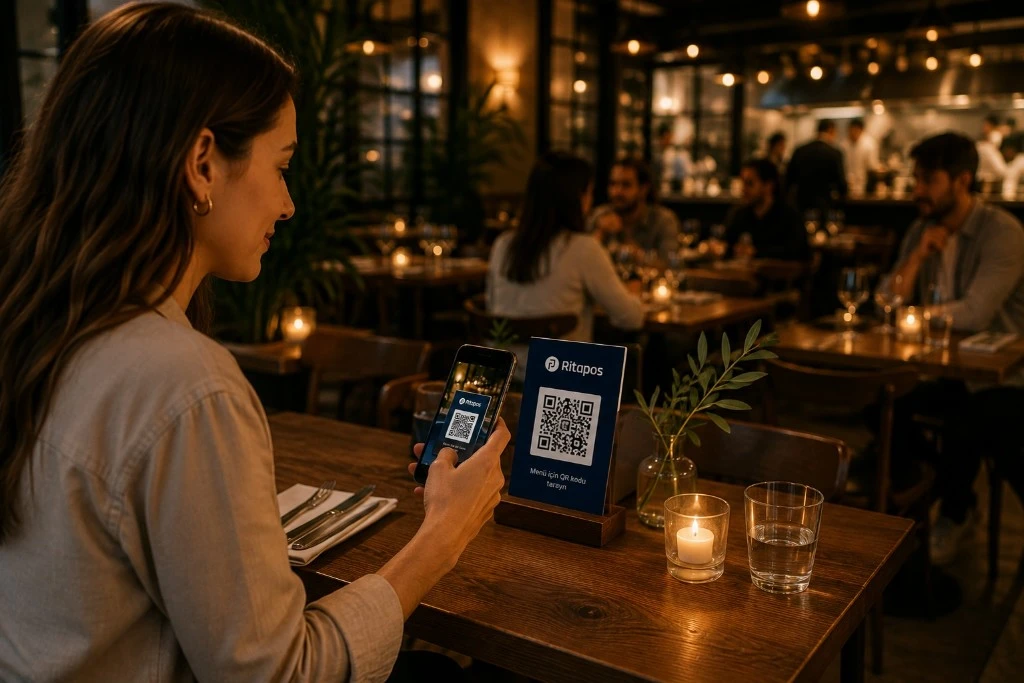
4. Follow genuine customer reviews regularly
When a guest settles the bill after the meal, you can ask for an honest review of their experience. Put the review link or QR code somewhere easy to reach. Offer the chance to give feedback to every guest, not only the ones who look happy.
Do not give a discount or a free item in exchange for a review. Google bans incentives like this, and its rules on collecting reviews also explain how to use links and QR codes. When you reply to a complaint, address the actual problem and say what you will check. Delays that keep happening will not be fixed by writing replies alone. For a worked approach, see our post on dealing with negative reviews.
5. Tie social media posts to the decision to visit
A good photo of a plate gets attention, but people also need to know where you are, when the dish is served and how to book a table. In the post, mention your neighborhood, the name of the dish and a sensible next step. If you are announcing a weekend special, for example, add the service day and the booking link.
Your weekly content plan could include one signature dish, a short prep clip from the kitchen and the answer to a question guests often ask. Do not judge success by likes alone. Visits to your menu link, booking enquiries and guests in the restaurant who say they saw the post are far more useful signals.
6. Build concrete partnerships with businesses nearby
Get to know the offices, hotels, workshops and event venues around you. You could offer office staff a lunch menu that can be prepared at set times, or give a nearby hotel an up-to-date menu it can point its guests to. In any partnership, be clear about who provides what and on which days the offer is valid.
Keep the first trial small. For example, try pre-ordered lunches with a single office for one week. Alongside the order count, look at the prep load and whether deliveries went out on time. Do not scale up a deal your kitchen cannot carry.
7. Design campaigns around your quiet hours
Giving everyone a discount on a Saturday night when you are already full can cut your income without creating any new demand. First find the service window that stays empty. Then put together an offer that makes sense for that time, such as an early evening weekday menu or a set lunch.
Spell out the product, price, day and time in the campaign. When you work out what the discount costs, include packaging, commission and any extra staff you might need, not only ingredients. For a limited-time dish announced on the QR menu, the example of setting up a campaign on a restaurant menu shows a similar preparation flow.
8. Cut waiting and order mistakes on the first visit
If a guest who came from an ad has to explain their order twice, they may not find a strong reason for a second visit. Watch which stage is slipping: greeting, taking the order, passing it to the kitchen or closing the check. Before a busy service, go over dish notes, items that have run out and table responsibilities with the team.
To make sure the order a waiter takes at the table reaches the kitchen correctly, you can set up your order management flow. If you are planning an event to bring in new customers, include capacity in that same preparation. The service you promise a guest matters as much as your promotional copy.
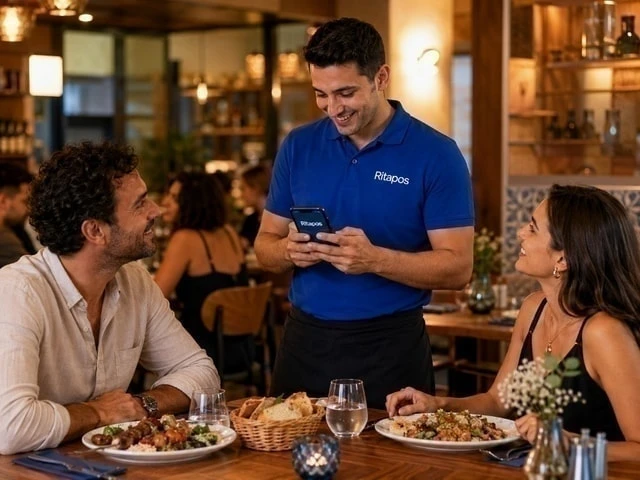
9. Give people a clear reason to come back
Loyalty work does not have to mean a complicated points system. A favorite dish that appears on a set day of the week, a regular tasting evening or a visit perk with clear conditions can all be reasons to return. Your team should be able to explain how the offer works in one sentence.
Ask first-time guests "How did you hear about us?", and notice which dishes and times your returning guests prefer. Sharing contact details and receiving campaign messages is the customer's choice. Do not make signing up, messages or an app a condition of getting good service.
10. Run delivery as a guest experience of its own
Someone who has never been to your restaurant may get to know you first through a delivery order. Not every dish that looks great in the dining room travels well, so check temperature, texture and packaging after the journey. Plan prep time around how busy the kitchen is at that moment, and make someone responsible for checking that nothing is missing.
Look at delivery revenue separately from dining room revenue. Commission, packaging and delivery costs are different, so the same sale amount may not leave the same contribution. A good delivery experience makes it more likely the customer picks you again for their next order.
11. Try small events that fit your concept
A chef's seasonal menu, a tasting with limited places or an early evening service timed around a cultural event nearby can give people a new reason to visit. Make the link between the event and your food offer obvious. A program put on just to draw a crowd, one that spoils the conversation or service for your regular guests, can backfire.
Set booking capacity together with the kitchen. In the announcement, give the date, start time, what the price covers and how to sign up. After the event, look beyond how full you were: check the extra cost and the service feedback from that night too.
12. Start local ads with a small test
If your menu, location and contact links all work, you can run an ad test aimed at the area around you. For the dining room, use the distance people can reasonably travel. For delivery, use the area you can actually deliver to. Rather than trying to show the whole menu in one ad, put a single dish or a specific service offer up front.
Before you start, write down the duration, the total spend limit and what you will count as success. For example, track booking requests that come from the menu page, and do not count a request that never turns into a visit as a new customer. If you cannot measure, fix the links and the way you record results before raising the budget.
A 30-day customer acquisition plan for your restaurant
The plan below is one example of how to put this into practice. The goal of the first month is not to open every channel, but to see which work suits your business.
- Days 1-7: Split the last two weeks of sales by service hour. Check your Google Business Profile details and menu link. Record your starting numbers so you can compare them next month.
- Days 8-14: Take real photos of your signature dish. Post them on your profile and on social media along with your location. Show the team how to ask guests where they heard about you and where to record the answer.
- Days 15-21: Test one costed offer in a single quiet service window. Set up a limited partnership with a nearby business. Note the orders from each of the two separately.
- Days 22-30: Compare the same days and time windows with your starting period. Make a note of weather, holidays and events nearby. Keep the work that brought in contribution, and rethink any test that brought orders but hurt service quality.
Which numbers should you track when attracting customers?
One busy weekend does not prove your campaign worked. Follow the same service windows for several weeks. A simple spreadsheet is enough for your records; what matters is using the same definitions and date ranges every time.
- Guest or order count: Track dining room guests, checks and delivery orders in separate columns.
- Average check value: Divide sales after discounts by the number of closed checks for the same channel and period.
- Campaign cost per new customer: Divide total campaign spend by the number of new customers recorded as coming from that work. Do not credit every visit with an unknown source to the ad.
- Repeat visits: Track first-time guests who come back within a period you set. If you cannot reliably tell people apart, do not produce a precise repeat visit rate.
- Contribution and service quality: Look at what is left of sales after variable costs and campaign spend, together with your records of waiting times, cancellations and complaints.
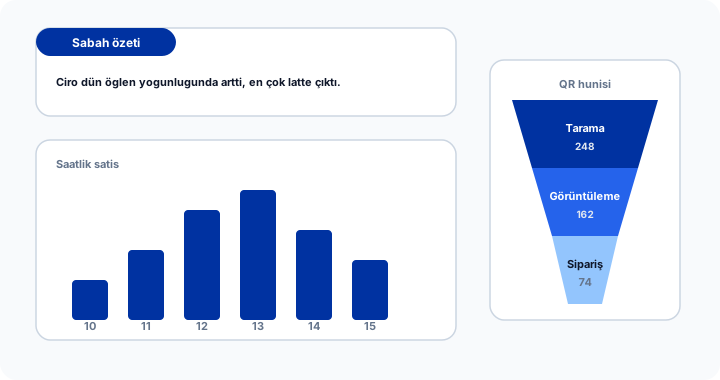
Example: does a discounted lunch menu really pay off?
In a purely hypothetical calculation, say each discounted menu sale leaves 300 TL and the variable cost per order is 180 TL. Each order contributes 120 TL before campaign costs. Twenty extra orders bring in 2,400 TL of contribution. If the work that brought those orders cost 1,500 TL, you are left with 900 TL. All amounts in the example are on the same tax basis.
That 900 TL is not net profit, because rent and other fixed costs have not been taken off yet. The twenty orders also have to be genuinely extra sales. If customers who would have paid full price anyway switched to the discounted menu, the result changes. Look into that difference before you judge the rise in sales.
Connect your sales data to your plan with Ritapos
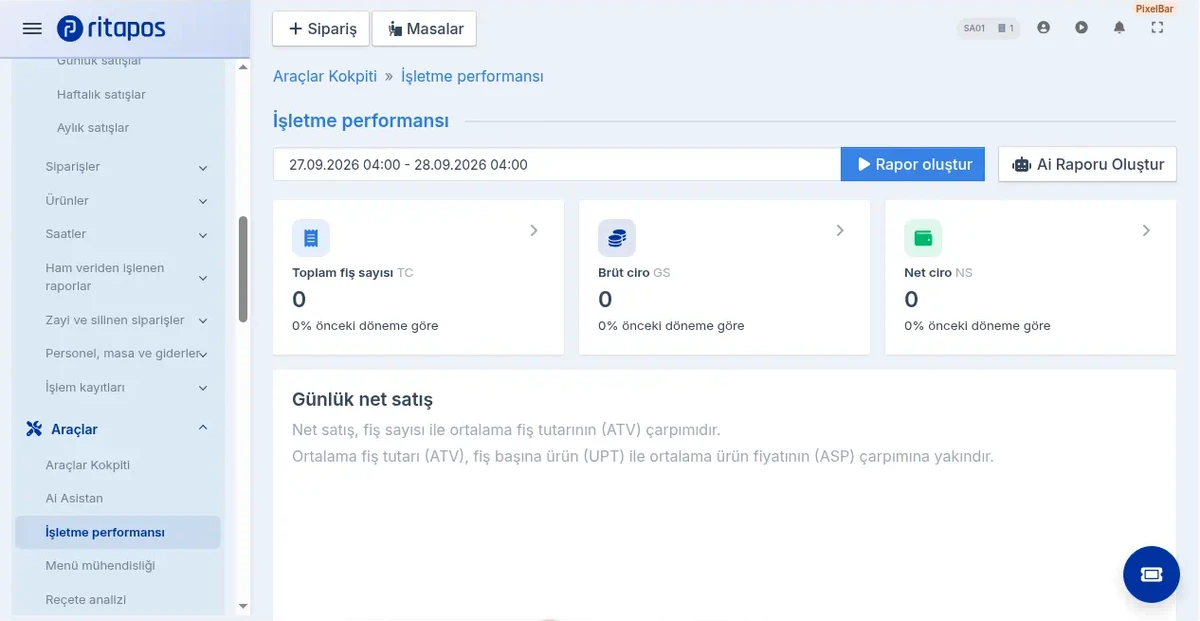
With the sales reports in Ritapos you can see which dishes and service hours stand out, and compare a campaign period with the one before it. For things like which channel brought a guest to your restaurant, set up a separate, regular way of recording it. Sales movement in the POS alone does not prove an ad brought in new customers.
Pick one service window first and take your baseline measurement. To organize your order, kitchen and billing flow alongside this plan, you can see how Ritapos could fit your business on the restaurant POS system page.

Frequently Asked Questions
What should a newly opened restaurant do in its first week to attract customers?
First check that people can find the business and reach its menu. Confirm your opening hours, map pin and phone number, and introduce your menu to businesses close by. Once a small service has shown you how ready the team is, widen your promotion.
How big should a restaurant advertising budget be?
There is no single figure that works for every business. Weigh your service capacity, your contribution per order and the total you can set aside for a test. After a small test whose source you can track, set the budget based on the results.
When do you see results from efforts to attract customers?
Fixing obstacles such as a wrong phone number or a broken menu link makes you easier to reach straight away. To judge steady customer growth, compare several weeks using the same days and service windows. Nobody can promise an exact timeframe or ranking for local search visibility.
What should you look at if customer numbers rise but the average check falls?
Check the share of campaign items, orders per guest and total discounts. The drop may come from a planned lunch menu, so compare total contribution and service capacity before deciding. More checks do not on their own mean higher earnings.
Take the First Step for Your Business's Future
14-day free trial. No credit card required. Cancel anytime.